


How to Request Face Framing at the Salon
A few soft pieces around your face can make a fresh blowout look more polished, your cheekbones pop, and your entire haircut feel less flat. But knowing how to request face framing is not always as simple as saying, “I want layers.” Face-framing can mean a haircut, color placement, styling, or a mix of all three.
Hello gorgeous, the best salon appointments start with clear communication. You do not need to know every technical hair term. You just need to explain what you want your hair to do around your face, what you want to avoid, and how much daily styling you are willing to put in.
What Face Framing Actually Means
Face framing refers to hair that is intentionally cut, colored, or styled to draw attention toward your face. The effect may be soft and blended, bold and visible, or somewhere in between. It is not one universal haircut.
For a cut, face framing is usually created with shorter pieces that begin around the cheekbones, lips, chin, or jawline and blend into longer layers. On a blowout, it can mean a bouncy swoop away from the face, a smooth curtain-like bend, or soft volume at the front that does not fall into your eyes.
Color can also create face framing. Brighter pieces around the hairline, often called money pieces, can add contrast and lightness near the face. That is a color service, not a quick blowout add-on, so be clear about which kind of face framing you mean when booking.
How to Request Face Framing Without Salon Speak
Start with the result you want, then add a few practical details. You could say, “I’d love soft pieces around my face that blend into my long layers,” or “I want volume and movement at the front, but I don’t want short pieces that constantly fall forward.” That gives your stylist something real to work with.
If you are asking during a blowout appointment, try: “Can you style the front away from my face with a soft bend and lots of volume?” If you like that lifted, glamorous look in photos, say so. If you prefer a cleaner, straighter finish for work or everyday errands, say that too.
The placement matters more than the name. Tell your stylist where you want the shortest point to hit. Cheekbone-length pieces can feel flirty and light. Pieces that begin near the lips or chin are often easier to grow out and can feel more subtle. Longer framing that blends below the jawline is a great choice if you want movement without committing to a noticeable change.
A useful sentence is: “I want the front to open up my face, but I still want to be able to put my hair up.” That detail helps prevent pieces from being cut shorter than your lifestyle allows.
Bring a Photo, but Explain What You Like About It
A photo is one of the quickest ways to get on the same page. Still, photos can be misleading. The model may have different density, curl pattern, length, extensions, or a filter doing a lot of the work.
Show one or two inspiration photos and point out the exact detail you love. Is it the airy curtain shape? The curl that flips away from the cheeks? The bright color around the hairline? The fullness at the crown? Naming the feature is much more helpful than asking for the entire look.
It also helps to share one thing you do not want. Maybe you dislike heavy bangs, pieces that cover your eyes, or choppy layers that look disconnected when your hair is air-dried. Your stylist can adjust the shape while keeping the same overall vibe.
Ask for a Shape That Works With Your Hair and Routine
The prettiest face framing is not just about face shape. Your natural texture, density, current cut, and styling habits all matter.
Fine hair can look gorgeous with a few carefully placed front layers, but too many short layers may make the ends feel wispy. Thick hair often holds a big, bouncy face frame beautifully, though it may need more blending so the front does not look bulky. Curly and wavy hair need extra consideration because the pieces will spring up as they dry. If you wear your hair natural most days, ask to see how the front will sit without a round brush or curling iron.
Your routine counts, too. A dramatic curtain fringe can look amazing after a fresh blowout, but it may need a little restyling on day two. If you want low-maintenance hair, request long, blended framing that grows out gracefully. If you love spending a few minutes with a round brush and want that polished, face-opening effect every day, you can go shorter and more sculpted.
There is no wrong choice. The right choice is the one that looks good on your actual Tuesday morning, not only during a special-event appointment.
Be Specific About Bangs and Layers
Face-framing layers and bangs are related, but they are not the same thing. This is where many appointment misunderstandings happen.
If you do not want bangs, say it clearly: “I want face-framing layers, not a fringe.” If you do want a soft bang effect, ask for “long curtain bangs that blend into the face frame.” That wording tells your stylist you want a gradual transition rather than a blunt line across the forehead.
You can also ask for a conservative first cut. Say, “Can we start longer and see how it feels?” Hair can always be shortened, while growing out a too-short front section takes patience. This is especially smart if you have not had layers around your face before or usually wear your hair tucked behind your ears.
How to Request Face Framing for a Blowout
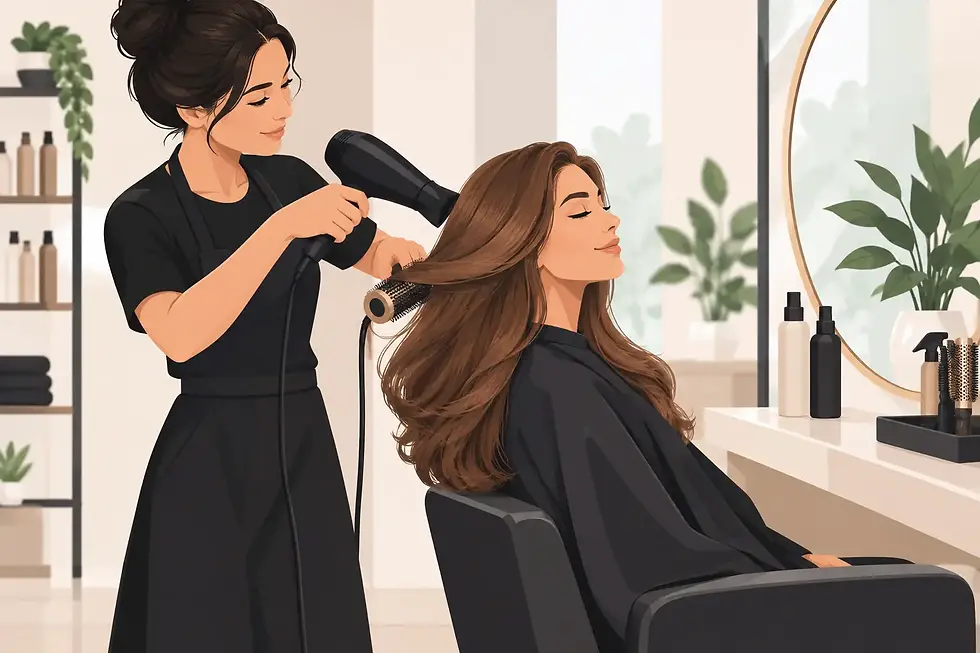
You do not need a haircut to get a face-framing effect. A professional blowout can create it with direction, volume, and a little bend at the front.
At Blowmeaway Blowout Bar, you can request a front section that is styled away from your face for that soft, expensive-looking finish. Let your stylist know whether you want a center part with curtain volume, a deep side part with a glamorous swoop, or a more natural finish with the ends gently turned back.
For a dinner, party, shower, or photo day, ask for extra lift at the roots and a polished curl that opens away from your face. For work or a more relaxed weekend look, request a smooth finish with soft movement rather than a defined curl. Both are face framing, but they give very different energy.
If you wear extensions, mention them when booking and at the beginning of the appointment. Extensions can make face framing look extra full, but they may need different placement and styling to blend naturally with your own front pieces.
Questions Worth Asking Before the First Snip
If you are getting a cut, ask how short the shortest layer will be when your hair is dry and styled naturally. Ask whether the pieces will still work with your preferred part. If you wear glasses, tell your stylist, since that can affect where the hair falls and whether it gets caught around the frames.
You can also ask what upkeep to expect. Some face-framing cuts need a trim every few weeks to stay intentional, while longer layers are much more relaxed. If you are growing out bangs or recovering from an uneven cut, be honest about it. A good plan may mean keeping the face frame longer for now instead of chasing a picture-perfect shape too soon.
Keep the Look Fresh Between Appointments
Face framing shows up best when the front of your hair has a little direction. On non-wash days, refresh only the hairline and front pieces with a round brush or large hot tool, then let the rest of your blowout stay intact. A light touch is usually enough.
Avoid loading the front with heavy oils or too much dry shampoo. Those pieces sit close to your face, so they can look separated or greasy faster than the rest of your hair. If you use hairspray, spray lightly and brush through so the finish stays touchable.
The best request is simple: explain the look, show the feeling, and tell your stylist what you need from your hair after you leave the chair. A soft, face-opening blowout or a beautifully blended new layer can be the little change that makes you catch your reflection and think, yes, she looks good.


Comments